Welcome to the exciting world of numbers! Learning to recognize, count, and write numbers is a fundamental step in your child's early math journey. Just like learning letters, understanding numbers involves several skills: recognizing the symbol, understanding its value (quantity), and then mastering the motor skills to write it.
Breaking this learning process into small, fun, and achievable goals helps build a strong foundation and keeps your little one motivated. A visual TaskBoard is a great way to track these "bitesize" steps and celebrate each success!
Let's start with the very first numbers: 1, 2, and 3!
Goal: Practice Recognizing and Writing Numbers 1, 2, 3
Here’s how you can break this goal down into engaging tasks for your TaskBoard:
1. Understanding and Writing Number '1'
-
Example Task 1: Find the Number '1': Show your child the number '1' on a card or book. Then, have them point to it among other numbers or objects. "Can you find the number one?"

-
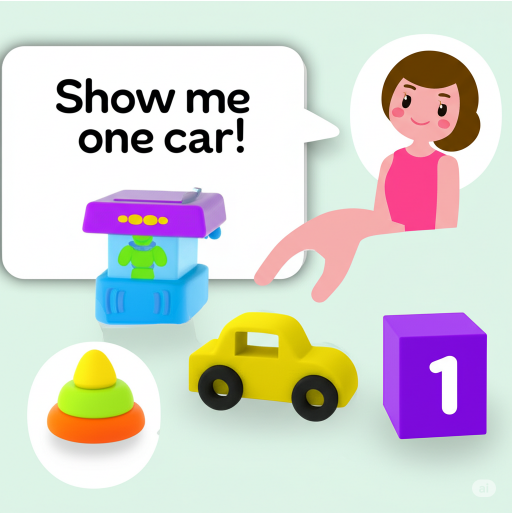
Example Task 2: Count One Object: Gather a few toys. Ask your child to give you "one" toy. "Show me one car."
-
Example Task 3: Trace Number '1' (5 Times): Use a worksheet or draw a large dotted '1'. Guide them: "Start at the top, straight line down, and you're done!"

-
Example Task 4: Write Number '1' By Myself (3 Times): Encourage them to write the number '1' independently. Praise their effort!

2. Understanding and Writing Number '2'
-
Example Task 5: Find the Number '2': Introduce the numeral '2'. Play a game of spotting the number '2' in books or around the house.
-
Example Task 6: Count Two Objects: "Can you count two blocks?" Have them touch each object as they count: "One... two!"
-
Example Task 7: Trace Number '2' (5 Times): Focus on the curve and the straight line: "Around and back on the railroad track, two, two, two!"
-
Example Task 8: Write Number '2' By Myself (3 Times): Let them try writing '2'. This shape can be tricky, so lots of encouragement!
3. Understanding and Writing Number '3'
-
Example Task 9: Find the Number '3': Show them the numeral '3'. "Let's look for the number three today!"
-
Example Task 10: Count Three Objects: Use fingers or small toys. "Let's count three buttons: one, two, three."
-
Example Task 11: Trace Number '3' (5 Times): Guide them with the two curves: "Around a tree, around a tree, that's the way to make a three!"
-
Example Task 12: Write Number '3' By Myself (3 Times): Independent practice for number '3'.
Tips for Success (Always Helpful!):
-
Make it Playful: Use songs, rhymes, and games to introduce numbers and counting.
-
Use Real Objects: Count everyday items like snacks, toys, or fingers and toes. This makes numbers tangible.
-
Multi-Sensory Learning: Write numbers in sand, with finger paint, or form them with playdough.
-
Short and Sweet Sessions: Keep practice times brief and engaging to match their attention span.
-
Celebrate Every Step: Acknowledge their effort and progress. Moving tasks to 'Done!' on a TaskBoard provides a great visual reward and builds excitement for learning.
Learning numbers is an adventure! By using these bitesize steps, you're helping your child build essential math skills and a positive attitude towards numbers. Happy counting and writing!